
Improving Retention and Viral Load Coverage using eDQIT/TTV innovation
Zambia has made significant progress and recorded remarkable achievements in its efforts toward achieving epidemic control, particularly in the fight against HIV/AIDS. The country has implemented wide-reaching strategies and interventions that have led to measurable improvements in public health outcomes. However, despite these commendable gains, several persistent challenges continue to hinder full epidemic control.
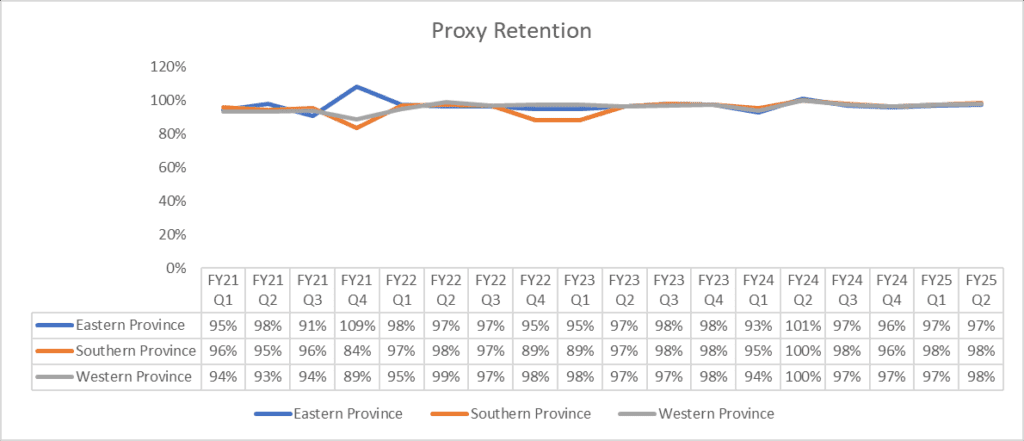
One major concern is the retention of clients on antiretroviral therapy (ART). Although the average retention rate across the three provinces stands at an encouraging 97%, sustaining this level of retention remains a complex task due to factors such as patient mobility, stigma, limited healthcare access in rural areas, and treatment fatigue.
Another critical issue is viral load suppression, which currently averages around 85% in the regions under review. While this figure reflects substantial progress, it still falls short of the UNAIDS 95-95-95 targets, indicating that a proportion of clients on ART are not achieving optimal viral suppression. This gap could be due to poor adherence to treatment regimens, drug resistance, or inadequate follow-up.
Additionally, data quality challenges pose a significant barrier to effective monitoring and decision-making. Inaccuracies, incomplete reporting, and delays in data entry and analysis compromise the ability to track program performance and identify gaps that need urgent attention. Strengthening health information systems and enhancing data management capacity at all levels of service delivery are therefore crucial for sustaining progress.
RETENTION RATE
What is eDQIT/TTV?
eDQIT, which stands for enhanced/electronic Data Quality and Improvement Tool, is an upgraded system that evolved from the Data Quality Management and Improvement System (DQMIS). This transformation reflects a broader effort to modernize and streamline data quality assessment processes in health programs, particularly within the HIV and TB service delivery frameworks. The enhancement incorporates electronic tools and dashboards to support real-time data monitoring, analysis, and feedback, making it easier to identify discrepancies, track performance, and implement timely corrective actions.
In parallel, the term TTV, or Triple Tally Verification, has emerged as a relatively new concept in the viral load monitoring landscape, specifically within the Antiretroviral Therapy (ART) Program. TTV refers to the process of cross-verifying data across three critical sources: patient registers, laboratory results, and electronic medical records or reporting systems. This triangulation helps ensure that data related to viral load testing and suppression is accurate, complete, and consistently reported key for tracking progress toward epidemic control goals.
In 2023, the four Centers for Disease Control and Prevention (CDC)-funded Implementing Partners (IPs) collaboratively revised the DQMIS into what is now known as eDQIT/TTV. This revision was not only a technical update but also a strategic response to growing concerns around data integrity, consistency, and reliability within the HIV/TB project ecosystem in Zambia. By combining the enhanced digital features of eDQIT with the verification rigor of TTV, the new system aims to reinforce a culture of data-driven decision-making, improve patient care outcomes, and ultimately contribute to more effective epidemic control.
OBJECTIVES OF eDQIT
The eDQIT/TTV has four specific objectives, which are
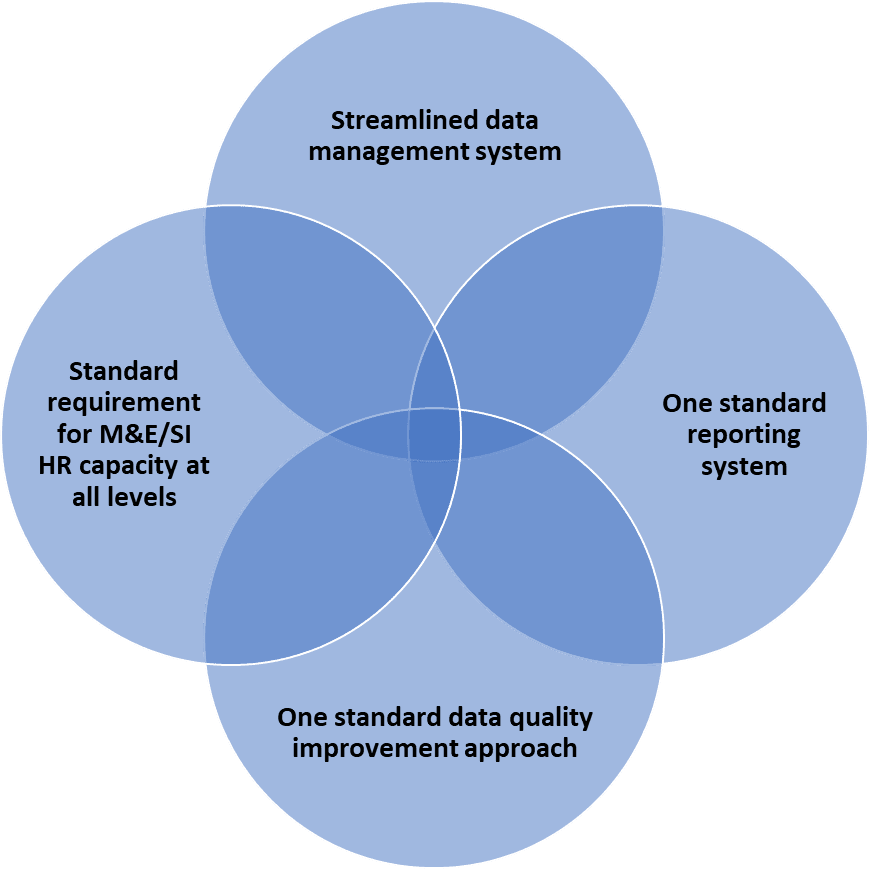
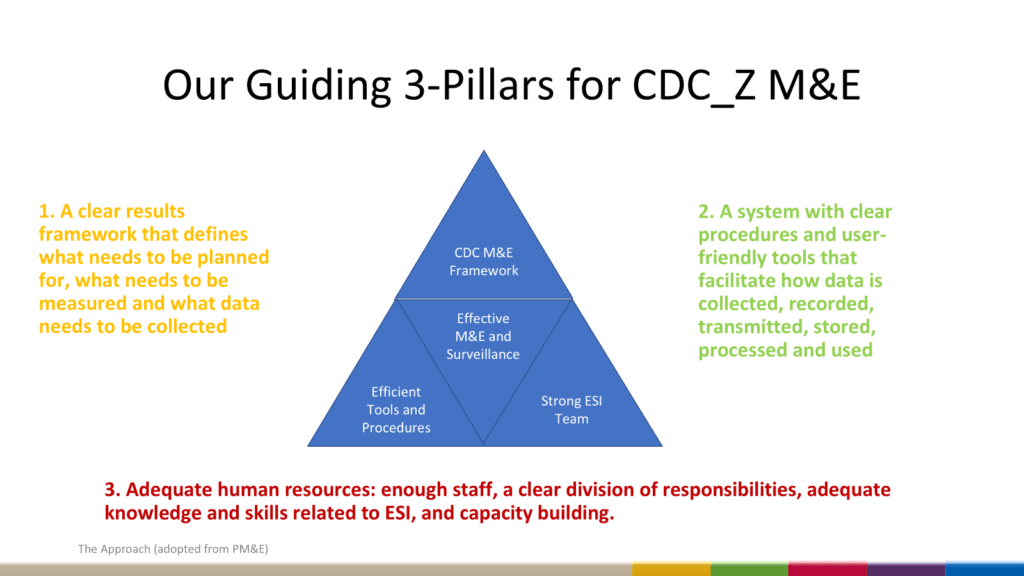
The eDQIT/TTV development was guided by three main pillars that helped to shape the conceptual design, development, and implementation of the tool. Below are the CDC Monitoring and Evaluation (M&E) pillars:
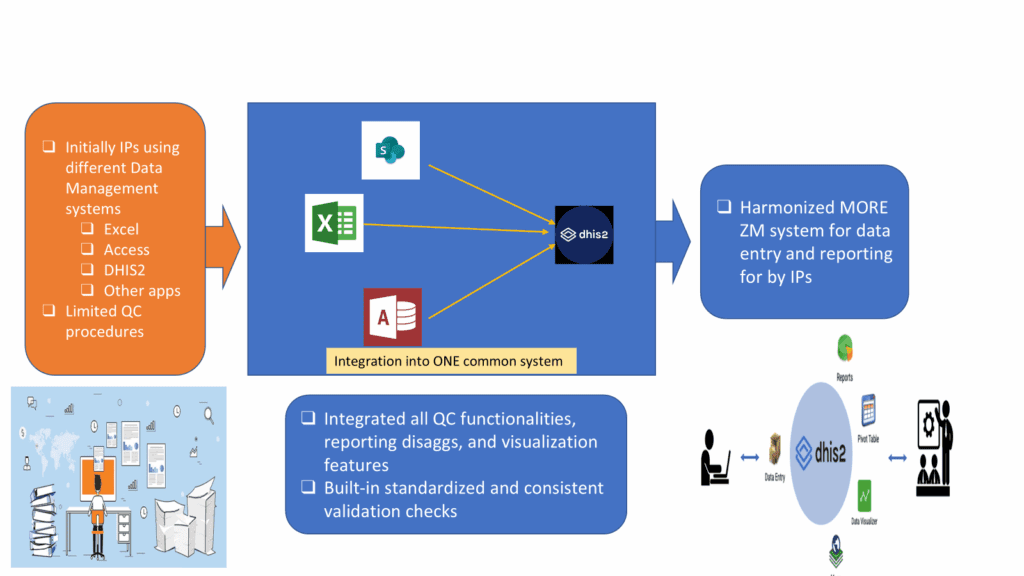
Universal Data Management Processes
How does eDQIT improve retention?
The eDQIT provides an automated Excel platform that automatically triangulates the data on clients who have been dropped or added to treatment current after meeting several criteria, including pasting the required reports. It does the following:
- It triangulates the reports from the previous reporting period and the current period, and it automatically flags those who have been dropped and those who have been added as clients who were not on the previous reporting period report
- It further checks and flags clients who did not collect medicine at the time of the facility visit.
By doing so, the clients are identified and retained for treatment. Successful implementation of the eDQIT not only improves data quality but also retention of clients through identification of both service and data gaps.
How does TTV improve Viral Load Coverage?
The TTV is a component within the eDIT, and its role is to triangulate viral data from the pasted reports, such as QAQI and the PCR DISA reports. The TTV improves viral load through:
- Identifying clients who are eligible for viral load but do not have a viral load
- Identify eligible clients for Viral Load and triangulate them with the DISA report to find their results through matching processes
- Provide insights to data and clinical teams on their current viral load coverage through its automated dashboard.
How to run the eDQIT/TTV?
To successfully run the eDQUIT, one should follow the well-tabulated instructions tab that has been put in the tool, and the criteria should be met, and these criteria are the following reports:
- QAQI
- ART Register
- All patient register
- DISA report
After pasting all the reports, the tool has customized Excel filters that can be used to navigate around the the tool
Data Quality Improvement as a shared responsibility
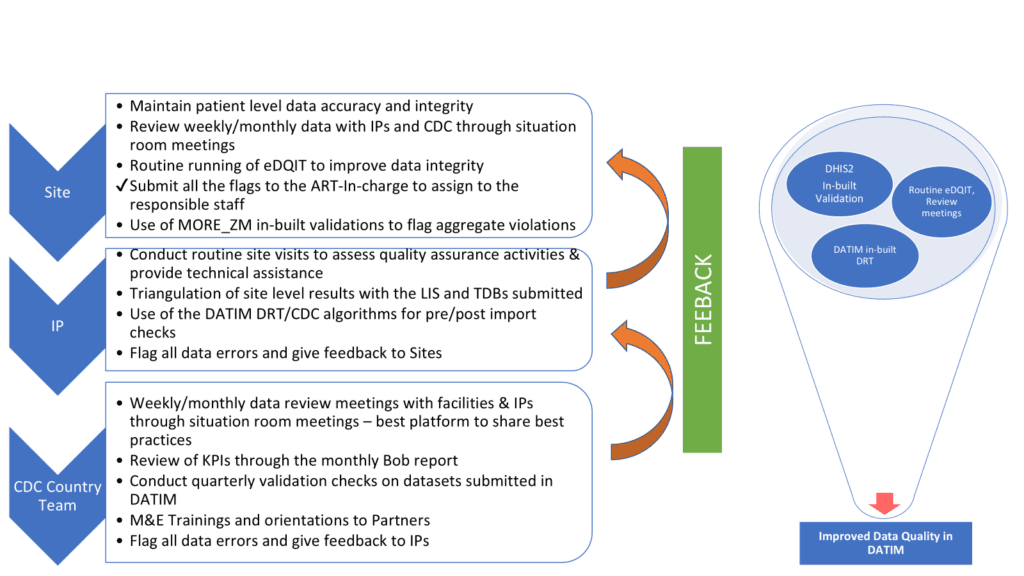
Advantages of using eDQIT/TTV
Below are the benefits of the eDQIT/TTV
- Improve data acuracy and integrity
- Be able to answer to all patient attrition
- Documented patient outcomes and audit trail
- Improved and accurate Viral load coverage calculation
- Improved triangulation of DISA data and SmartCare and reduce the manual search of clients in the Laboratory DISA systems.
- Simplified and reduced time spent to triangulate RoCs who drop from the system.
- Improved M&E efficiency and data management capacity through minimum standards
- Improve MER indicators data quality through automated indicator recounts
Developers of eDQIT/TTV
The eDQIT/TTV was developed by four CDC IPs, namely the Eastern Provincial Health Office (EPHO), Southern Provincial Health Office (SPHO), Lusaka Provincial Health Office (LPHO), and Western Provincial Health Office. From each province, there were one or two personnel who were dedicated to the development as listed below:
| eDQIT Core Development Team | |
| Names of core team | IPs |
| Yonah Tembo | SPHO |
| Chisenga Kenneth | EPHO |
| Lichaha Simwawa | WPHO |
| Robert Magenge | LPHO |
| Wakumelo Nalishuwa | LPHO |
| Philip Munzele | SPHO |
| Reuben Mkandawire | EPHO |
| Osprecious Kanyanta | LPHO |
| Trevor Machila | CIDRZ |
| Alick Chuba | UTH-HAP |
| Maybin Mumba | CDC |
| Boyd Kaliki | CDC |
| Brian Muyunda | CDC |
| Levi Mbulo | CDC |